Saturday 3 July 2021: I wonder when you last, indeed if you have ever, had a literary discussion with your dentist?
I had my first one last Monday morning at Leeds Dental Hospital, where I kept an appointment to have a rear tooth extracted, the second in as many weeks.
Arriving in the small windowless operating room, the surgeon – a man in his late 30s – noticed I had a book under my left arm.
“What’s that you’re reading?”
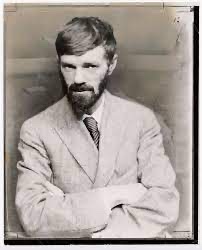
“It’s a biography of the writer, D H Lawrence.”
“The new one, which I have seen good reviews of?”
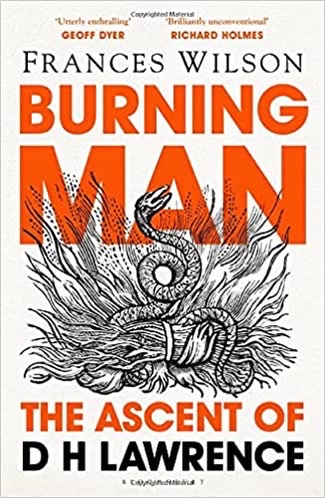
“No, not Burning Man (by Frances Wilson), but a much earlier one by John Worthen – D H Lawrence: The Life of an Outsider.”

“Is it any good?”
“Yes it is – a gripping, well written, clear-sighted portrait of a writer who I think has been unfairly treated by modern, especially feminist, critics”.
“But he was controversial – a terrible sexist, often a misogynist, sometimes a fascist, and also an uncritical colonialist?”
“Well, that’s a good list of what he’s been accused of. But, I’m not so sure.
Take the sexism charge. I have always thought his two greatest novels – The Rainbow and Women in Love – are about the independence of women.
True, Lawrence argued that women should submit to male leadership; but he wrote fiction after fiction in which they do no such thing.
Also, some of the most important relationships in his life were with women whose judgments he respected enormously – his mother, Lydia; Jessie Chambers, Louie Burrows, Alice Dax and, of course, Frieda Weekley, who he eventually married.”
“I must look at him again. The last time was in my undergraduate years when I read Sons and Lovers and some of his poetry. Is that where I should begin anew now?”

“Why not. But don’t neglect The Rainbow. I remember reading repeatedly its first page when I first encountered it (in 1968), thinking this is super writing.
And don’t ignore either Lawrence’s essays. Geoff Dyer, a huge DHL enthusiast, has pulled together a wonderful collection of them in his book, Life with a Capital L. They are freewheeling and playful; fresh and forceful; ranging over a heap of interesting topics – the arts, songbirds, morality, obscenity, religion.
And his letters! Lawrence was a tremendous and frequent writer of them. James Boulton has condensed into one-volume a marvellous selection of them. Look it up. You won’t be disappointed, I promise.”
“What then do you most like about Lawrence?”
“That’s a hard one. Certainly, I like his absolute effort completely to become identical with his ideas; to make himself a troubled witness to some of our deepest existential dilemmas, in particular about how best to accommodate love in the face of competing forces to it.
Although Lawrence was not always right, he was mostly honest when writing about himself and topics that interested him and in his dealings with others.
He was no prevaricator. He didn’t mess about. He said and wrote what he meant. His letter to Ernest Weekley (dated 8 May 1912), in which he dares to declare love for his wife, Frieda, and his resolve to extract her from their marriage, for instance, is an astonishing example of his capacity for candid directness: “I love your wife and she loves me . . . I feel as if my effort of life was all for her.”
“You may not like where Lawrence puts you; but you know exactly what that place is.
I have always liked that about him. Indeed, it’s also what I like about a lot of people I know well. And it’s how too I have regularly chosen to live my own life.
No wonder then I keep re-reading Lawrence. For I identify so much with him.
My own ‘outsider’ status frequently articulates with his. And, as in his case, I have been wrongly accused of being sexist! But never a colonialist!”
“Biographies? I do wonder about their reliability.”
“I know what you mean, having read a lot of them over the years. All I can say is that there are good ones and there are bad ones, in terms of how they are written and the sources they draw on.
John Worthen’s life of DHL is very authoritative; while Frances Wilson’s highlights individuals that aren’t prioritized by other biographers.
What they share is a desire to rehabilitate Lawrence’s reputation; to restore him to relevance; and to make his earnestness worth attending to.
They each succeed in my opinion. It’s time the ghost of Kate Millett was fully exorcised, for hers is a very selective reading.”
Sunday 20th June 2021: What does the notion ‘post-Covid’ mean? Does it refer to a time when society can resume functioning more or less as it did before the pandemic because the virus is no longer either present or not a serious threat?
Much of Team Johnson’s rhetoric about ‘Freedom Day’, ‘unlocking society’, ‘getting back to normal’ and ‘re-opening the economy’ implies as much.
Relatedly, the successful rollout of the UK’s vaccination programme provides justification for it to think we can get ahead of, even beat, the virus, thus fully breaking the link between infection and hospitalization, including high death rates, and so confidently resume where we left off.

Certainly, some of the most recent data give good grounds for such thinking.
However, there are also other data – admittedly, not many – that indicate the Delta variant is more resistant to Covid vaccines.
Also, as I write this, the R-number for England is dangerously between 1.2 and 1.4, with the number of new infections growing by 3% to 6% a day, suggesting we are in more bother than the PM is willing publicly to admit to.
Indeed, I am more inclined to believe Sir Patrick Vallance, the UK’s Chief Scientific Adviser, who recently said that “the virus will be with us forever”. England’s Chief Medical Officer, Professor Chris Whitty, has said the same, warning that Covid illness and deaths will be with us “for the rest of our lives”. Both are also anxious to point out that this year’s global coronavirus death toll is already higher than that of last year.
They each recognise too that the threat of new variants is a very real one because much of the world is likely to remain unvaccinated for many years to come. Currently, only about 10% of the global population has received at least one dose, and there are some who think many people living in low income countries will never get a single jab.
The just-concluded G7 didn’t impress in this connection. Knowing it needed to commit to distribute 11bn vaccines over the next 12 months, it agreed just 1bn.
Near water-tight border controls would get round the problem of importing unwanted variants. But can anyone seriously envisage this government agreeing to implement them?
I am then more inclined to the view that we should stop giving credibility to Johnson’s promise of a ‘Freedom Day’, taking collectively seriously instead the idea that the new coronavirus is here permanently to stay and that living with it requires us fundamentally to re-think how, in both the short and long term, we live, work and socialize with each other so as to best protect everyone from the threat of the disease.
For starters, there’s an urgent need, I think, to facilitate public agreement about the level and type of risks we are willing to tolerate to end or amend restrictions of association.
This means the government should stop forthwith from allowing public health policy to be overly influenced by the economic needs of the entertainment and hospitality sectors. Some pubs and pizzerias may have to close forever. And some sporting events and concerts may be compelled to take place with continuing limited spectator involvement.
This will undoubtedly foster economic hardship, which government will need financially to remediate. It may also have to put in place a national programme of work re-training for those who lose their jobs because of the pandemic.
Either way, we need urgently to have a public debate about what kind of economy is best suited to an age of pandemic, including a root and branch revaluation of different kinds of work, assessing honestly what is essential and what isn’t.
Behind all of this is what I consider to be the defining ideological question of the new pandemic times we find ourselves in – what size and kind of state is needed to facilitate human flourishing?
In the short term, however, we surely must fully think through, and in public, how best to protect ourselves from getting ill with Covid.
Professor Dame Johnson, President of the Academy of Medical Sciences, is surely on to something when she says, “what we want is to do the things that least disrupt our lives and minimise the risk of infection. Good hygiene, remote working, mask wearing, not mixing with people when we have symptoms, cycling rather than taking public transport, avoiding needless flights – all these and more should play a part in the post-lockdown world”. And another part must surely entail implementing a permanent fully-effective, nation-wide test, track and isolate system.
While these are good places to begin, the bigger questions of political economy can’t be avoided, to which can be added concerns about how in future we should conduct trade, use land, interact with wildlife and travel internationally.
So far, it is difficult to detect much of an effort among government and opposition to ask them, least of all a desire to implicate the public in arriving at answers.
Thursday 17 June 2021: I wonder what James Joyce, if he had been alive this week, would have made of the fact that on Tuesday evening billions of dollars were wiped off the market value of Coca-Cola following the one-word long snub a celebrity soccer player, Cristiano Ronaldo, gave to one of its products.
 He’d surely have thought, ‘what kind of world economy is that? Seems like “shite and onions” to me’.
 By contrast, I’m certain Joyce would have been overjoyed to know that Ulysses, his modernist fictional masterwork, and my DID’s book, is still being read and honored 99 years after its publication in 1922.
 For yesterday was Bloomsday, which is the only annual commemoration of a fictional date I know of. Are there any others? Let me know if there are.
The sixteenth of June, the day on which Joyce sets all the action of his epic, is today a major literary event, celebrated all over the world, from Dublin to New York and around and down to Sydney, Australia.

And we may well ask, ‘why is that?’, which is really another way of asking just what is so special about Ulysses that causes so many people to want to live inside it for a day each year, whether by selectively reading some of its pages, listening to actors wrestling with its linguistic challenges, tracing the fictional steps of its protagonists through the actual or imagined neighbourhoods of 1904 Dublin, or even eating fried kidneys for breakfast.

Or what causes me to spend so much time, not just reading and re-reading Ulysses, but additionally buying and consulting numerous academic studies of and reference books about it (like Kieberd’s generous Ulysses and Us; Blamires’ brilliant Bloomsday Book; and Gifford’s addictive Ulysses Annotated), including attending associated seminars and subscribing to a relevant journal?
Predictably, there are many reasons why. These extracts from something else I have written about my experience of reading Ulysses give a sense of what my appreciative enthusiasm is all about:
Of all the many books of fiction I own, Ulysses is the one I would never want to be parted from, for reading it enabled me to contemplate experience and transform it in a very special way, initiating fundamental alterations in how I think and act as a result.
As I read it, I regularly found myself having Bloom-like thoughts, wishing I was more like him: able to love without being possessive; to be generous without being prompted; to be magnanimous without being sycophantic; to be sincere without being bigoted; to be strong without being assertive; to be simultaneously highly cosmopolitan and supremely local; and to be practically-minded as well as intellectually driven.
The novel then is a kind of moral primer, with Bloom as ethics teacher, which explains my definition of it as ‘Biblical fiction’, connecting with the comment made about it by one of its most insightful friends, Declan Kiberd, who writes admiringly of Ulysses as a form of ‘wisdom literature’, teaching us how better to conduct ourselves; giving advice on how to cope with grief; and how to be frank about the prospect of death;”. Ulysses thus puts hard and urgent questions to us. It is all-including.
It’s also fabulously well written. Each of its 18 sections has a unique form and linguistic distinctiveness, which include unpunctuated streams of consciousness, sonic experimentations with words and phrases, and a multitude of parodies. Its legion of historical, religious and musical allusions are also totally alluring. After years of studying them, there are still many that catch me out. How did Joyce know all these things?
And the novel is often very funny and satirically insightful. I dare you not to smile as you read some of these – my favourite – quotes from it:
You can’t bring time back. Like holding water in the hand.
Shite and onions …. life is too short.
Don’t cast your nasturtiums on my character.
I’m beholden to you …. May your shadow never grow less.
You know I always had a soft corner for you.
He knows more than you have forgotten.
Death is the highest form of life.
I have the impetuosity of Dante and the isosceles of a triangle.
We can’t change the country. Let’s then change the subject.
Every life is many days, day after day. We walk through ourselves, meeting robbers, ghosts, giants, old men, young men, wives, widows, brothers-in-love. But always meeting ourselves.
If I have a favourite quotation, it is Bloom’s despairing self-disparaging comment in the ‘Circe’ section:
I am exhausted, abandoned, no longer young. I stand, so to speak, with an un-posted letter bearing the extra regulation fee before the too late box of the general post office of human life.
Reading Ulysses took me out of my comfort zone as an appreciator of the novel, prompting me to reconstruct what I imagined to be its limits, including that of written language itself, and the risks that can be taken with it.
It reminded me too of the constraints of all particular styles of writing, each having its assumptions and limitations.
Joyce also spurred me on, though not for the first time in my life, to break down language in order to scrutinize its relationship to consciousness and reality.
Many years before I properly read Ulysses, Wittgenstein’s philosophy had taught me about the importance of this. To that extent, both novelist and philosopher, in their very different ways, helped me better to appreciate more profoundly than any other pair of writers before or since the poetics and dignity of everyday living and ordinary language.
So, how this year did I celebrate Bloomsday? I re-read Ulysses’ very enjoyable section 12 (‘Cyclops’).

It’s the one in which Bloom goes into Barney Kiernan’s pub. The Citizen, accompanied by Garryowen, his terrifying pet dog, is holding court.
Afternoon pints freely flow and the talk is full of gossip. Bloom pretends to be oblivious to taunts about his wife and supposed win on the horses. The Citizen, in grandiose one-eyed fashion, rants about Irish nationalism and targets Bloom for being Jewish.
Bloom fights back, declaring “Christ was a Jew!”. Garryowen and a biscuit tin chase him out of the pub and down the street.
If you own like me the Penguin Classics edition of Ulysses you can read the Citizen’s hyperbolic version of nationalism (which is akin to the worse kind of Leaver rhetoric) on pages 425 and 427, the last of which includes a very amusing satire based on the Apostles’ Creed. It’s one of a long series of must-read parodies in this section (thirty of them!), each of which has a one-eyed quality, contrasting with Joyce’s persistent two-eyed view of things, which Bloom embraces and for which he attracts a hostile reaction.
Cyclops also includes that famous put-down quote, “A nation? says Bloom. A nation is the same people living in the same place” (p.430); and a very funny satire on the pomposity of titles (p.448).